10min TOCFL Band A Try the app
0:00/0:07
Look at the picture, listen, and choose the answer that matches it.
Full explanation, vocabulary and grammar

Answer and explanation

Look at the picture, listen, and choose the answer that matches it.

Answer: B (heard in the recording)

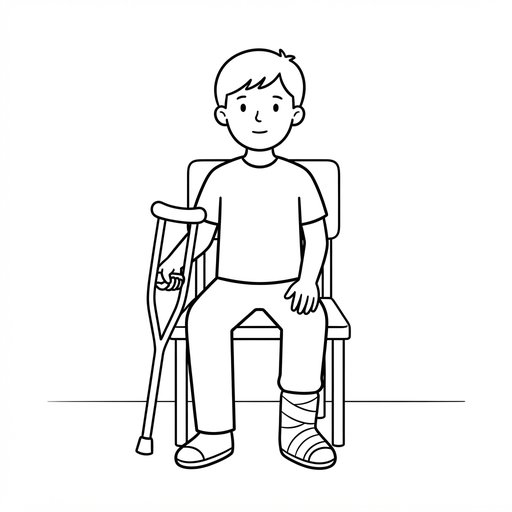
  • A (heard in the recording)錯誤(身體部位/感受狀態詞替換混淆)。圖中男孩沒有摀著頭的動作,繃帶纏在腳踝而非頭部,與頭痛無關。Wrong (swapping a body part or feeling). The boy in the picture is not holding his head. The bandage is on his ankle, not his head. It has nothing to do with a headache.
  • B (heard in the recording)正確。男孩的腳踝纏著繃帶,手裡拿著拐杖,這兩項線索明確顯示他的腳受傷了。Correct. The boy has a bandage on his ankle and holds a crutch. These two clues clearly show that his foot is hurt.
  • C (heard in the recording)錯誤(身體部位/感受狀態詞替換混淆)。圖中沒有摀著肚子的動作,繃帶與拐杖都指向腳部受傷,而非肚子不舒服。Wrong (swapping a body part or feeling). The boy is not holding his stomach. The bandage and crutch both point to a hurt foot, not a stomachache.

Band A vocabulary in this question

WordPinyin · ZhuyinMeaningLevel
頭痛tóu tòngㄊㄡˊ ㄊㄨㄥˋto have a headache; troublesomeadjective我今天頭痛,不想去上課。A2
肚(子)dù(zi)ㄉㄨˋ(ㄗ˙)belly; stomachnoun我肚子餓了。A1

Grammar in this question

  • 怎麼「怎麼」放在動詞前面,問用什麼方法做這件事。句型是「怎麼+動詞」。這個字怎麼念?
  • 怎麼了「怎麼了」問一個人或東西發生了什麼事。看到不好的樣子的時候常問。句型是「主詞+怎麼了?」。你怎麼了?不舒服嗎?

More questions?

Start Band A mock